
From 'Drop Your Property' to Published Listing: Inside Our 4-Step Property Intake Process
By Square Estates · Last updated
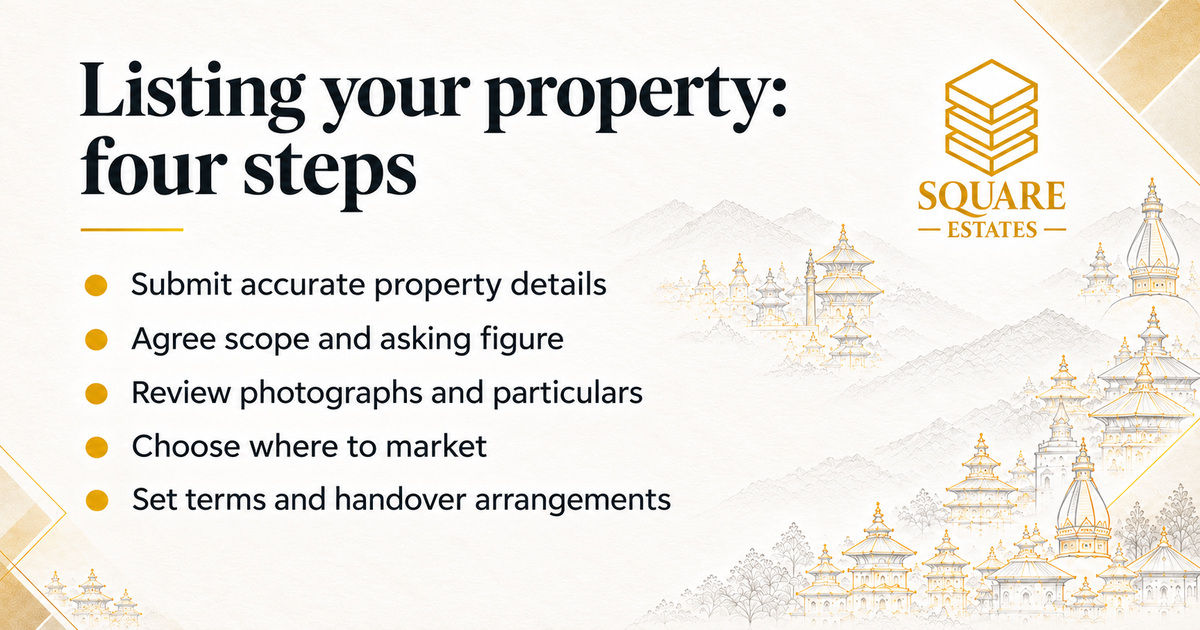
Square Estates' four-step intake starts with an owner's submission. Prepare the property details, agree the scope and review the route to marketing and completion.
Square Estates' property intake starts with the details an owner submits: what the property is, where it is and whether it is for sale or rent. Its Drop Your Property page sets out four stages: submission, assessment and advice, going live, and closing the deal.
For an owner in Kathmandu or Lalitpur, the useful preparation is to make those first details accurate and decide how the property may be presented. An occupied family home needs different viewing arrangements from an empty apartment. A property offered for both sale and rent needs a clear asking figure for each.
1. Submit the property details
The form asks for contact information, property type and address, size, bedrooms and bathrooms, availability and parking capacity. Owners can select sale, rent or either, enter an asking price or monthly rent, choose the currency and describe the property in their own words.
Use the description to explain details that a form field cannot capture. For an apartment, that might be which parking space is included or whether the quoted rent includes building charges. For a house, it might be that the owner still lives there and needs notice before a visit. If something is uncertain, identify it for the consultant to confirm.
Keep land area and built-up area separate. An area stated in aana describes a different measurement from the floor space of a house. Include the original unit and say what it measures; do not combine both into one larger total. The same care applies to the asking figure: a monthly rent, a total sale price and a price per unit of land are different offers.
Submitting the form opens a conversation. The location, property and requested service still need to fit the engagement.
2. Assess the property and agree the approach
Square Estates describes this stage as advice on pricing, preparation and listing strategy. Its selling service focuses on Kathmandu and Lalitpur and asks owners to confirm the scope of an engagement.
Have the asking figure and its basis ready for that discussion. A neighbouring home's advertised price can be a reference point, but it is not proof of a completed transaction at that amount. Differences in access, usable parking, condition and what is included can change the comparison. A pricing discussion should make those differences visible without promising a sale price or completion date.
Before authorising representation, agree the scope, fees, payment timing and any exclusivity in writing. Identify who can approve the description and photographs, arrange access and respond to an offer. An owner abroad may also need to establish who can act locally and what authority that person has.
Keep the limits of the work clear. A visit for marketing photographs or condition notes is not a structural assessment. Ownership and transaction documents, building condition and tax questions may need the appropriate independent professionals. Agree which checks are included, who carries them out and which questions remain open before relying on the listing.
3. Prepare the presentation and decide where it appears
The intake page says professional photography is arranged at the going-live stage. Preparation should give prospective buyers or tenants an accurate view of the property. An owner can help by confirming which rooms are available to photograph, what furniture or fittings are included and whether any feature needs explanation.
The seller service describes private circulation before selective public marketing. That means public publication should be agreed, rather than assumed from a submission. Confirm the permitted photographs, the description and the channels appropriate to the property. If the home is occupied, agree viewing notice and access arrangements as well.
Read the particulars as someone seeing the property for the first time. Does the parking description explain what is available? Are additional charges clear? Does the stated availability match the owner's plans? Correcting those details before circulation gives the next conversation a firmer starting point.
4. Handle enquiries, terms and completion
Square Estates' published closing stage covers viewings, negotiations and paperwork. Once enquiries arrive, the owner needs a way to receive feedback and approve the next step. Agree a contact person and how offers will be recorded, including their conditions and proposed timing.
For a sale, the offer and eventual transfer require their own document and payment checks. For a letting, the rent, deposit, included items and handover arrangements need to be settled in the agreement. The landlord service describes preparation, tenant selection and lease handover; confirm the work included in the particular engagement.
Keep the final handover practical. Record the agreed possession date, keys, included items and outstanding matters. Where someone else will attend for the owner, settle their authority and instructions beforehand. A published listing is an intermediate step; the owner's approvals and the agreed terms still guide what happens next.
Square Estates
Ready to take the next step?
Our team knows the Kathmandu Valley property market. Book a free consultation.
Book a consultation